“Prevention is always cheaper than treatment.”
Every poultry farmer has heard this saying, but few appreciate how much it depends on one critical management practice — biosecurity.
Many farmers think biosecurity is simply about keeping diseases out of the farm. While that is true, it is only half the story.
Imagine spending months raising a healthy flock. Then one bird becomes infected. If the disease spreads from one poultry house to another because of poor management, the problem is no longer about disease entering the farm — it is about disease moving within the farm. This is why every successful poultry farm needs two complementary lines of defense, namely:
- External biosecurity to keep diseases from entering the farm.
- Internal biosecurity to stop diseases from spreading if they get inside.
Neither one can replace the other. They work together to protect your birds, your investment and your profitability.
What Is Biosecurity?
Biosecurity is a set of practical measures designed to reduce the risk of introducing and spreading infectious diseases on a poultry farm. The stronger your biosecurity programme, the lower your risk of disease outbreaks. Just as you protect your home against unwanted visitors, biosecurity protects your poultry from harmful organisms such as viruses, bacteria, fungi and parasites.
Understanding External Biosecurity
External biosecurity focuses on preventing disease-causing organisms from entering your farm. External biosecurity main purpose is to keep disease outside the farm boundary and ensure they could not break into the farm
Every person, vehicle, bird, animal, piece of equipment or supply entering your premises has the potential to introduce disease. That is why external biosecurity begins at the farm gate.
Common External Biosecurity Measures –
1. Control Farm Access – Controlling farm access is the first line of defense against disease introduction. Every visitor, vehicle and piece of equipment entering your farm has the potential to carry harmful pathogens on footwear, clothing, tires or tools. By restricting entry to only essential personnel, maintaining a visitor register and ensuring that all approved visitors follow biosecurity procedures before entering, you significantly reduce the risk of introducing infectious diseases into your flock.
Every unnecessary visitor is an unnecessary biosecurity risk. Disease prevention starts at the farm gate.
2. Install Functional Footbaths – A functional footbath is an essential external biosecurity measure that helps prevent disease-causing organisms from being carried into the farm on footwear. It should be placed at every farm entrance and the entrance to each poultry house, filled with the correct disinfectant at the recommended concentration, and changed regularly to remain effective. A dirty or poorly maintained footbath provides little or no protection and can even become a source of contamination.
A footbath only protects your flock when it is clean, properly maintained, and used correctly every time someone enters the farm.
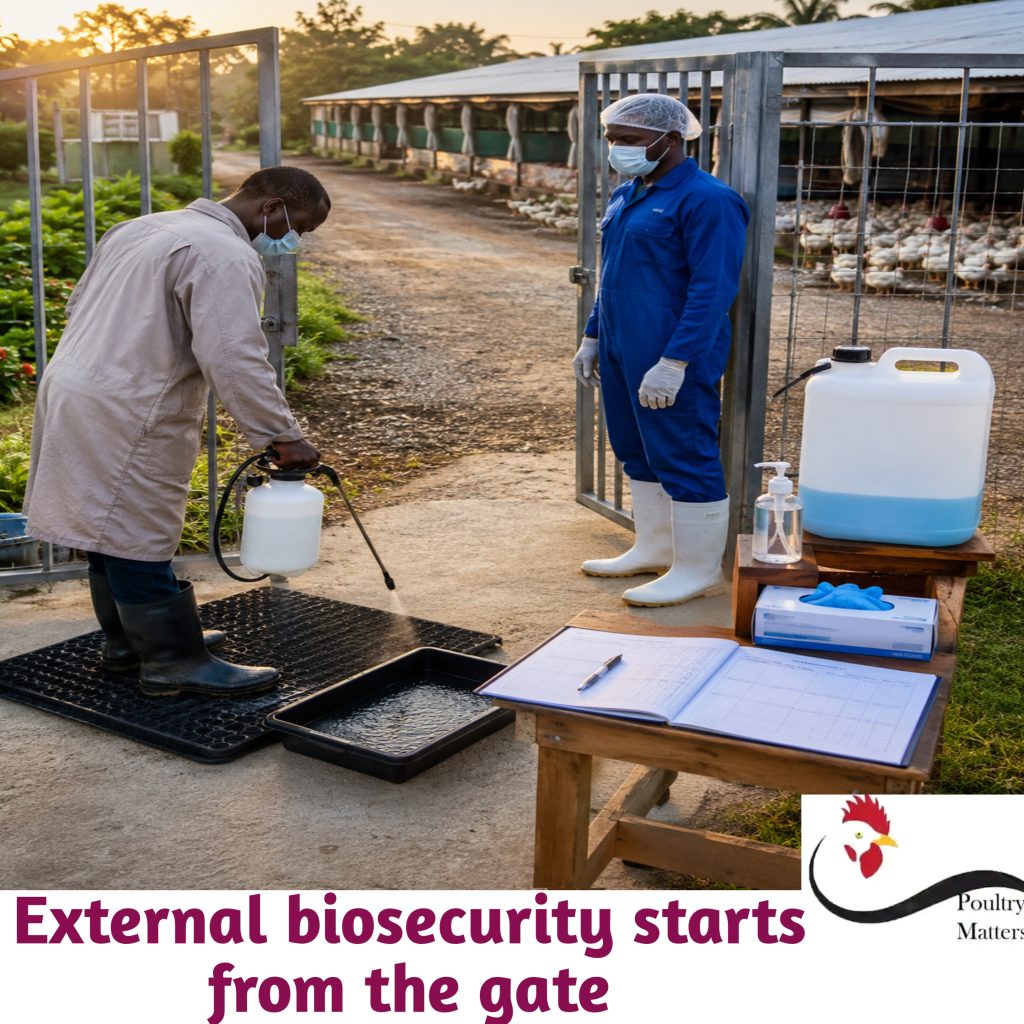
3. Disinfect Vehicles and Equipment – Vehicles and equipment that move between farms can carry disease-causing organisms on their tires, wheels, undercarriages, cages, crates and surfaces. Before entering your farm, all vehicles and reusable equipment should be thoroughly cleaned and disinfected using an approved disinfectant. This simple practice helps prevent pathogens from being introduced and spreading to your flock.
If it has been on another farm, clean and disinfect it before it enters yours. Clean equipment protects healthy birds.
4. Purchase Healthy Birds – The health of your flock begins with the birds you bring onto your farm. Always purchase day-old chicks or replacement birds from reputable hatcheries or trusted suppliers with a proven record of good health and strong biosecurity practices. Introducing infected or poor-quality birds can bring diseases into your farm and threaten the health and productivity of your entire flock.
Healthy flocks start with healthy birds. Buy from trusted sources to reduce the risk of introducing disease onto your farm.
5. Control Wild Birds and Rodents – Wild birds and rodents are common carriers of disease-causing organisms that can contaminate poultry houses, feed, water and equipment through their droppings, feathers, urine, and direct contact. Prevent their access by repairing holes in buildings, installing bird-proof netting, keeping feed properly covered, eliminating hiding places and implementing an effective rodent control program.
If wild birds and rodents can access your farm, diseases can too. Keep pests out to keep your flock healthy.
6. Quarantine New Birds – Newly purchased or returning birds should never be introduced directly into your existing flock. Keep them in a separate quarantine area for at least 2–4 weeks to monitor their health and watch for signs of disease before mixing them with other birds. This isolation period helps prevent the introduction of hidden infections that may not be immediately apparent.
Never mix new birds with your flock immediately. A short quarantine period can prevent a long and costly disease outbreak.
Understanding Internal Biosecurity
External biosecurity protects your farm gate. Internal biosecurity protects every bird inside the gate.
Internal biosecurity refers to management practices that prevent disease from spreading from one poultry house, flock, age group or section of the farm to another. Even the best-managed farms can experience disease challenges. The difference between a minor problem and a devastating outbreak often depends on how strong the farm’s internal biosecurity is.
The purpose for internal biosecurity on the farm include –
- Protect healthy birds.
- Curtail disease spread quickly.
- Reduce production losses.
- Prevent one infected house from becoming a farm-wide outbreak.
Common Internal Biosecurity Measures
1. Follow the right inspection order – When inspecting multiple poultry houses or flocks, always move from the healthiest and youngest birds to the older, weaker or sick birds. This inspection order minimizes the risk of carrying disease-causing organisms from infected or high-risk flocks to healthy ones. If possible, change or disinfect boots, clothing and equipment before moving between houses.
Always move from clean to potentially contaminated areas. The order in which you inspect your birds can determine whether disease spreads or is contained
2. Use Dedicated Equipment – Using separate equipment for each poultry house or flock helps prevent the spread of disease-causing organisms within the farm. Items such as feeders, drinkers, shovels, buckets, brushes, and egg trays should not be shared between houses unless they have been thoroughly cleaned and disinfected. This simple practice reduces cross-contamination and helps keep healthy birds protected.
Equipment can spread disease just as easily as people. Keep tools dedicated to each poultry house or disinfect them before reuse.
3. Change Protective Clothing – Protective clothing such as overalls, boots, gloves, and hair covers can carry disease-causing organisms from one poultry house to another. Farm workers should change into clean, house-specific protective clothing or thoroughly clean and disinfect reusable items before entering a different poultry house. This helps prevent cross-contamination and limits the spread of disease within the farm.
Clean protective clothing protects healthy birds. Never carry contamination from one poultry house to another.
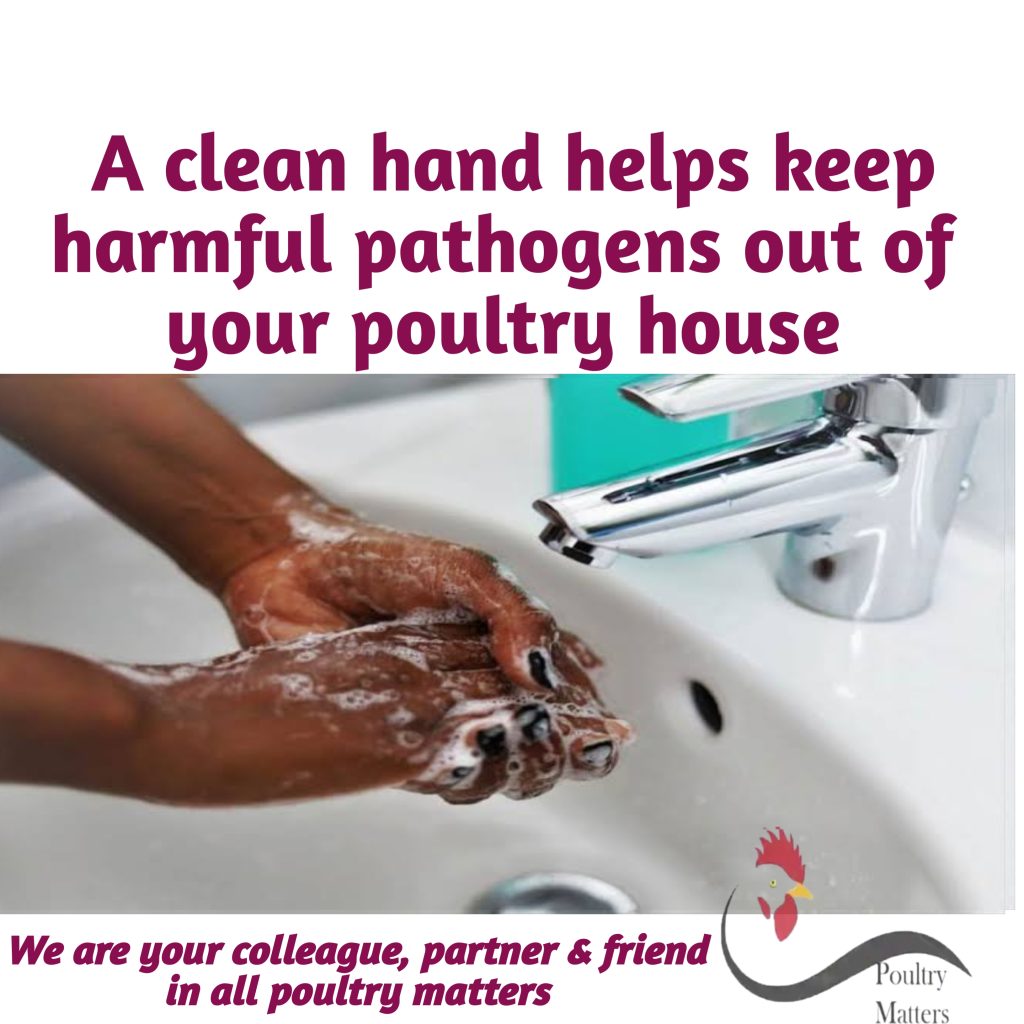
4. Clean and Disinfect Between Houses – Disease-causing organisms can easily be carried from one poultry house to another on boots, hands, equipment, and tools. Before moving between houses, clean visible dirt and thoroughly disinfect all reusable equipment and footwear using an effective disinfectant. This simple routine helps break the chain of disease transmission and protects healthy flocks from cross-contamination.
Never carry contamination from one poultry house to the next. Clean first, disinfect next, then enter – small habits make a big difference.
5. Isolate Sick Birds Immediately – Birds showing signs of illness should be separated from the healthy flock immediately. Sick birds can shed disease-causing organisms through their droppings, respiratory secretions, or direct contact, allowing infections to spread rapidly within the poultry house. Prompt isolation allows for closer observation, proper treatment and helps protect the rest of the flock from infection.
Key message: Never leave sick birds among healthy ones. Early isolation is one of the most effective ways to stop disease from spreading within your farm.
6. Dispose Dead Birds Properly – Dead birds can harbor large numbers of disease-causing organisms and become a major source of infection if left inside or around the poultry house. Therefore it is essential to remove mortalities promptly and dispose of them using approved methods such as incineration, deep burial or composting where appropriate. Proper carcass disposal helps prevent disease spread, reduces attraction of pests and scavengers, as well as, promote a clean, healthy farm environment.
Never leave dead birds on the farm. Prompt and proper disposal is essential to breaking the cycle of disease transmission.
External Biosecurity vs Internal Biosecurity
| S/N External Biosecurity Internal Biosecurity 1 Prevents disease from entering the farm. Prevents disease from spreading within the farm. 2 Focuses on the farm boundary. Focuses on activities inside the farm. 3 Controls outside risks. Controls inside risks. 4 Protects the farm from new infections. Protects healthy birds from infected birds. 5 Protects the farm entrance. Protects everything behind the entrance and inside the farm |
Why You Need Both External & Internal Biosecurity
Some farmers invest heavily in visitor control but allow workers to move freely between poultry houses without changing boots.
Others maintain excellent hygiene inside the farm but allow unrestricted visitors and poorly disinfected vehicles to enter.
Both situations create unnecessary risks. A chain is only as strong as its weakest link. Effective disease prevention requires strong external and internal biosecurity working together.
Benefits of Strong Biosecurity
When both internal and external biosecurity systems are properly implemented on the farm, poultry farmers can expect:
- Reduced disease outbreaks.
- Lower mortality incidence.
- Better feed conversion efficiency.
- Improved growth and egg production.
- Reduced medication and treatment costs.
- Better flock welfare.
- Increased customer confidence.
- Higher profitability.
Biosecurity is not an expense, it is an investment that pays dividends every production cycle.
Conclusion
Healthy birds do not happen by chance, they are the result of consistent management and disciplined biosecurity practices. External biosecurity protects your farm from outside threats while internal biosecurity protects your healthy birds when challenges arise inside the farm – Neither should be ignored.
The strongest poultry farms are not necessarily the ones with the biggest buildings or the most birds.
They are the ones with systems that prevent small problems from becoming major disasters.
Protect your farm gate. Protect every bird inside the gate. Build a culture of biosecurity, and your birds — and your business—will be stronger because of it.
External biosecurity keeps disease out. Internal biosecurity keeps disease under control. Together, they form the foundation of a healthy, productive, and profitable poultry farm.
Download this biosecurity checklist to support your process https://drive.google.com/file/d/1S8WgeWiv5BM35XxgC2mMrr5bIXuOM4vJ/view?usp=sharing
Read more on biosecurity –https://poultrygist.com.ng/common-biosecurity-lapses-among-poultry-farmers-and-how-to-avoid-them/