“The most expensive feed in the world is worthless if your birds cannot eat it properly or drink clean water.”
Every successful poultry farmer understands one simple truth – feed builds the bird but water makes every biological process possible. Together, they account for approximately 65–75% of the total cost of poultry production, making them the two most critical resources on any poultry farm.
Yet, many farms continue to lose money not because of poor genetics or disease outbreaks but because of avoidable mistakes in feed and water management. Feed wastage, contaminated drinking water, poorly adjusted feeders and drinkers, inconsistent feeding schedules and inadequate water supply silently reduce growth rates, egg production, feed efficiency and ultimately farm profitability.
Whether you raise broilers, layers, breeders or indigenous chickens, mastering feed and water management is essential for producing healthy birds and running a profitable poultry enterprise.
This guide outlines practical, evidence-based best practices that every poultry farmer should implement.
Why feed and water management matters
Feed provides the nutrients birds need for growth, maintenance, egg production, immunity and reproduction. Water, however, is often underestimated despite being the most essential nutrient. A chicken can survive much longer without feed than without water. Water is the most essential nutrient in poultry production. It plays a critical role in digestion, nutrient absorption and transport, body temperature regulation, waste elimination and virtually every metabolic process that keeps birds healthy, productive and performing at their best. When feed or water is poorly managed, the consequences are immediate and costly. Common outcomes include –
- Slower growth rates, delaying birds from reaching their target market weight.
- Poor Feed Conversion Ratio (FCR), meaning more feed is required to achieve the same level of production.
- Reduced egg production and poorer egg quality, lowering the profitability of laying flocks.
- A weakened immune system, making birds more vulnerable to infections and environmental stress.
- An increased risk of disease outbreaks, resulting from poor nutrition, dehydration, or contaminated water.
- Higher mortality rates, leading to avoidable production losses.
- Reduced farm profitability, as increased costs combine with lower productivity and poorer overall flock performance.
Good feed and water management transforms these challenges into opportunities for better performance and higher returns.
Best practices for feed management
Choose high quality feed – No management practice can compensate for poor-quality feed. Always purchase feed from reputable manufacturers or formulate balanced diets using quality ingredients if mixing your own feed. A good poultry feed should provide the appropriate balance of:
- Energy
- Protein
- Essential amino acids
- Vitamins
- Minerals
- Healthy fats
Avoid feed that appears moldy, has an unusual odor, contains excessive dust or shows signs of spoilage. Remember: Poor-quality feed is expensive even if it costs less.
Feed according to the bird’s age and production stage – Nutritional requirements change throughout a bird’s life thus it is important to provide the correct feed at every stage –
- Chick Starter
- Grower Feed
- Finisher Feed
- Layer Mash
- Breeder Feed
Using the wrong feed can reduce growth, delay maturity, decrease egg production and waste money.
Maintain consistent feeding schedule – Birds thrive on routine – Feed them at approximately the same times every day to encourage consistent feed intake and reduce stress. Irregular feeding schedules may lead to:
- Uneven flock growth
- Aggressive competition
- Reduced production
- Increased feed wastage
Consistency improves flock uniformity and productivity.
Minimize feed waste – Feed wastage directly reduces profits. Common causes of wastage include:
- Overfilled feeders
- Feeders positioned too low
- Broken feeders
- Rodent infestation
- Wet or spoiled feed
- Birds scratching feed onto the floor
Practical solutions to reduce waste include:
- Fill feeders only one-third to one-half full.
- Adjust feeder height so the lip is level with the birds’ backs.
- Repair damaged feeding equipment promptly.
- Clean spilled feed immediately.
- Store feed properly to prevent spoilage.
Every kilogram of feed saved contributes directly to the farm profitability
Store feed properly –Improper storage encourages mold growth, nutrient loss and pest infestation. Therefore, it is necessary to store feed –
- In a cool, dry, well-ventilated room
- Off the floor using pallets
- Away from direct sunlight
- Away from moisture
- In rodent-proof storage areas
Always follow the First-In, First-Out (FIFO) principle to ensure older feed is used before newly purchased stock.
Best practices for water management
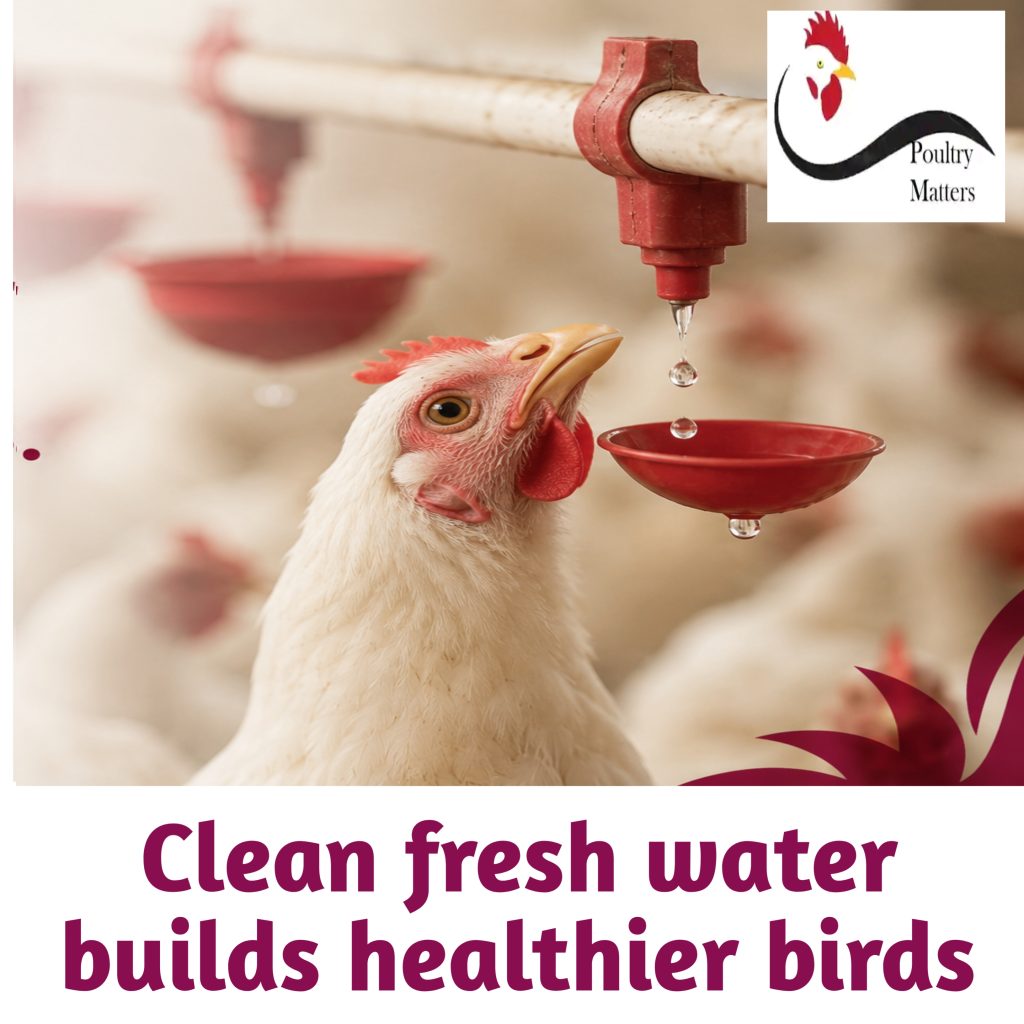
Supply clean fresh water at all time – Birds should never be without water. Even a few hours without water especially during hot weather can significantly reduce feed intake, growth, egg production and overall performance. Replace dirty water immediately and refill drinkers regularly.
Keeping drinking equipment clean – Drinkers can become breeding grounds for harmful bacteria, algae, fungi and biofilms if not cleaned regularly. Dirty drinkers increase the risk of diseases such as bacterial infections and digestive disorders. Best practice includes:
- Washing drinkers daily
- Removing slime and biofilm
- Sanitizing water lines regularly
- Inspecting nipple drinkers for blockages or leaks
Clean water begins with clean equipment.
Ensure easy access to water – Every bird should have convenient access to water. Avoid overcrowding around drinkers by providing enough watering points throughout the poultry house. Poor drinker placement causes –
- Competition
- Stress
- Uneven flock performance
- Reduced water intake
Proper drinker distribution encourages uniform bird growth.
Adjust drinker height as necessary – Incorrect drinker height causes water wastage and limits access. While proper adjustment gives all the birds access to water, keeps litter dry and reduces disease risk. Therefore, it is necessary that –
- As birds grow, farmer raise drinkers accordingly.
- For bell drinkers, the lip should generally be level with the birds’ backs.
- For nipple drinkers, birds should stretch slightly upward when drinking.
Monitor water quality – Poor water quality can reduce vaccine effectiveness, interfere with medications, damage equipment, and negatively affect bird performance. Clear water is not always safe water, therefore to confirm water quality, the farmer must regularly test water for –
- Bacterial contamination
- PH
- Mineral content
- Iron levels
- Salinity
The relationship between feed and water intake
Feed and water intake are inseparably linked in poultry production. Water is essential for appetite stimulation, feed digestion, nutrient absorption, and the efficient utilization of every kilogram of feed consumed. Whenever birds reduce their water intake, whether due to poor water quality, inadequate supply, high temperatures or faulty drinker systems, they almost immediately reduce their feed consumption as well. This decline in feed intake deprives birds of the nutrients and energy required for normal growth, egg production, immune function and overall performance. Even a short period of reduced feed consumption can negatively affect flock productivity and profitability, leading to –
- Poor weight gain
- Lower egg production
- Poor feed conversion
- Increased susceptibility to disease
This is why farmers should monitor both feed and water consumption daily. Know that sudden changes in the birds behaviour often serve as early warning signs of disease, environmental stress, equipment failure, or management problems.
Practical daily management checklist
Developing and consistently following a simple daily management routine is one of the most effective ways to prevent costly mistakes on the farm. Routine inspections help identify small issues before they become major problems, ensuring that feed and water are always available, equipment is functioning properly, birds remain healthy and environmental conditions stay within the optimal range.
A few minutes of disciplined daily monitoring can prevent significant production losses, reduce mortality, improve flock performance and protect the profitability of your poultry enterprise. Thu, these activities are recommended for daily routine –
- Check that all feeders contain fresh feed.
- Confirm every drinker is functioning properly.
- Remove contaminated feed and water.
- Clean drinkers and feeding areas.
- Observe birds while eating and drinking.
- Measure feed and water consumption.
- Record unusual changes.
- Inspect for leaks and feed wastage.
- Remove wet litter around drinkers.
- Refill feeders appropriately
Small daily actions produce significant long-term results.
Common feed and water management mistakes
Many poultry farmers struggle with poor growth, low egg production, high feed costs, or unexpected mortality without realizing that the problem often lies in everyday management practices not the birds themselves. Here are some of the most common feed and water management mistakes that silently reduce farm profitability –
- Allowing drinkers to become dirty, exposing birds to harmful bacteria and disease.
- Allowing birds to run out of clean water, even for a short period, which immediately reduces feed intake and performance.
- Feeding moldy, wet, or expired feed, leading to poor nutrition and increased health risks.
- Overfilling feeders, resulting in unnecessary feed wastage and higher production costs.
- Setting feeders and drinkers at the wrong height, making it difficult for birds to eat and drink comfortably while increasing feed contamination.
- Storing feed improperly, exposing it to moisture, rodents, insects, and nutrient deterioration.
- Overcrowding birds, creating excessive competition for feed and water and causing uneven growth across the flock.
- Failing to monitor daily feed and water consumption, causing early warning signs of disease or management problems to go unnoticed.
The encouraging news is that these mistakes are entirely preventable. Small improvements in your daily feed and water management can lead to healthier birds, better feed conversion, faster growth, improved egg production, lower mortality and greater profitability without increasing your production costs.
The profitability advantage of effective feed and water management
Feed and water are not just production inputs, they are investments. How efficiently you manage them has a direct impact on your flock’s health, productivity and your farm’s profitability.
When feed and water are managed correctly, the benefits extend far beyond keeping birds alive. They translate into measurable improvements across every aspect of poultry production, including –
- Improved Feed Conversion Ratio (FCR), enabling birds to convert feed into body weight or eggs more efficiently.
- Faster and more uniform growth, helping birds reach market weight on schedule.
- Higher egg production and better egg quality, maximizing returns from laying flocks.
- Lower mortality rates, as birds remain healthier and more resilient.
- Greater flock uniformity, making management, vaccination, and marketing more efficient.
- Reduced feed wastage, lowering one of the largest operating costs on the farm.
- Lower veterinary and medication costs, thanks to healthier birds with stronger disease resistance.
- Improved litter quality, creating a cleaner environment that supports bird welfare and reduces disease pressure.
- Higher profitability and a stronger return on investment (ROI) through improved production efficiency.
The most successful poultry farmers understand a simple principle: profit is not determined by how much feed you buy, but by how effectively your birds convert every kilogram of feed and every litre of clean water into healthy growth, quality eggs, and sustainable income.
Remember: Every bag of feed and every litre of clean water should work for your business. Manage them wisely, and they will reward you with healthier birds, lower production costs and greater profits.
Conclusion
Successful poultry farming is not determined solely by the quality of your birds or the price of your feed. It is built on disciplined daily management.
Feed nourishes your flock while water powers every physiological function necessary for life and production. When both are managed effectively, birds remain healthier, productivity improves, production costs decrease and profitability increases.
As the saying goes: Healthy feed management + Clean water management = Healthy birds + Better performance + Higher profits.
Invest in these fundamentals every day, and your poultry business will be better positioned for sustainable growth and long-term success.
Read more to improve your poultry business https://poultrygist.com.ng/7-key-operational-inefficiencies-that-erode-poultry-farm-profit-margins/
improve on the water system of your poultry feeding. Here is a checklist to help you https://drive.google.com/file/d/1vUaHpcvTNnqOm9DqRZELGwx5AUEilro3/view?usp=sharing