Deep Litter vs. Cage housing systeem
Choosing the right poultry housing system is one of the most important decisions every poultry farmer must make. Your choice affects not only bird health and productivity but also your farm’s management style and long-term profitability. Let us take a closer look at the two major housing systems used in modern poultry farming —
Deep litter housing system
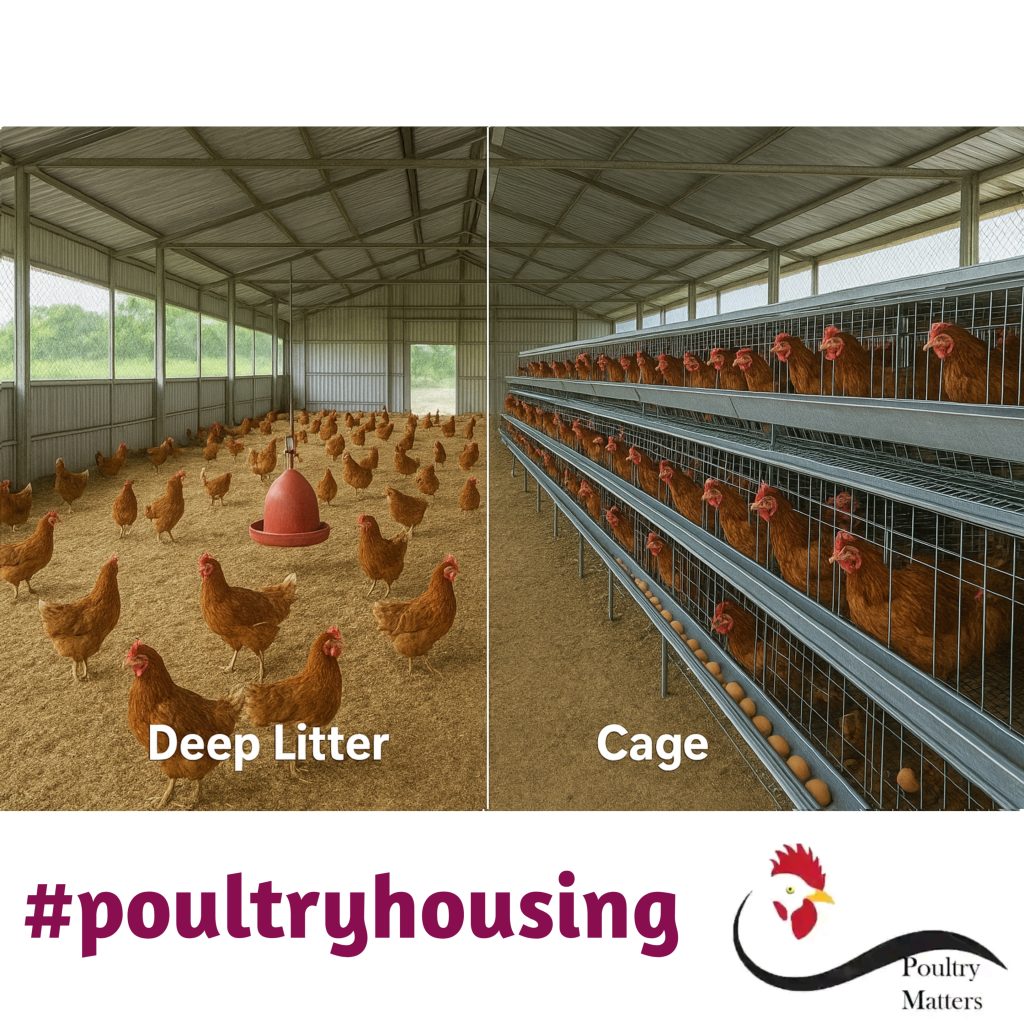
The Deep Litter System is one of the most common and traditional methods of poultry housing. Birds are kept on the floor of a house covered with litter material such as wood shavings, rice husk, or sawdust. The litter absorbs moisture and birds’ droppings.
Basic features of the deep litter system
The following are basic features of a deep litter poultry house –
- Birds move freely on the floor.
- The floor is covered with a 3–6 inch layer of litter material.
- Suitable for both broilers and layers (especially in small to medium-scale operations).
- The house is well-ventilated to control moisture and ammonia buildup.
Structure of the deep litter housing
A typical deep litter house has a cement or compacted earth floor, covered with litter. It includes feeders, drinkers, perches and proper ventilation openings. The roofing and walls protect the birds from rain, wind and predators. Deep litter housing demands proper litter management and vaccination for constant healthcare of the birds
Management style
- Litter must be changed regularly to keep it dry and prevent caking.
- The house should be cleaned and disinfected between batches.
- Adequate space must be provided. About 1.5 to 2 square feet per bird to avoid overcrowding.
Advantages of the deep litter housing system
- Allow birds express their natural behavior, such, as dust bathing, etc.
- It involves relatively lower construction and setup cost
- It is easier to manage, particularly for small sized flock
- The litter can be recycled and used as organic fertilizer after cleaning the house
Challenges of deep litter housing
- Allows greater exposure of the birds to droppings and litter. This increases the risk of diseases such as coccidiosis and worm infestation
- The free spread and movement of the birds makes it difficult to monitor individual bird performance
- May get eggs dirty or broken by the layer birds
- Demands regular maintenance to control odour and moisture
Cage housing system
Cage housing is a more modern and intensive housing system where birds are kept in wire cages, usually arranged in tiers. It’s mostly used in layer production because it allows for easy egg collection, efficient feed use and better monitoring of birds.
Basic features of wire cage housing system
- Birds are kept in wire or metal cages raised above the floor.
- Each cage has separate compartments for feeding, watering and egg collection.
- Manure drops below the cages and can be collected for disposal or processing.
Structure of the cage housing
Cage systems can be battery cages (single or multi-tier) or automated cages with conveyor belts for eggs and waste removal. The house requires good lighting, ventilation and a strong support frame to carry the cages safely.
–
Management style for cage housing
- Birds are confined, making management more controlled.
- Feed and water are supplied through troughs or nipple drinkers.
- Routine cleaning of manure and equipment is necessary to prevent disease buildup.
Advantages of the cage housing
- It promotes better hygiene and lower disease spread due to limited bird contact with droppings.
- It facilitates easier egg collection process.
- It makes the farm egg output come in cleaner appearance and less breakage.
- It supports efficient feed conversion and less wastage.
- Enhances easier record-keeping and bird monitoring.
Challenges of cage housing
- It requires higher initial investment cost compared to the deep litter housing
- It constrict the birds to limited movement. This may cause stress or weaker legs in birds.
- It requires more technical knowledge to manage effectively.
- Waste management can become an issue without proper systems.
Which system should you choose?
Your choice depends on your budget, scale of operation, available space, and management capacity.
- For beginners or small-scale farmers, the deep litter system may be more practical and affordable.
- For commercial or large-scale layer operations, the cage housing system offers better efficiency and egg production control.
Conclusion
No housing system is perfect — desired success depends on how well you manage your farm environment, maintain hygiene, and meet your birds’ welfare needs. Whether you go for deep litter or cage housing, focus on good ventilation, proper feeding, regular cleaning, and disease prevention to ensure a productive poultry enterprise.