Maintaining a clean and well-managed poultry house is one of the most powerful steps a farmer can take to protect flock health and improve productivity. Many of the most common poultry diseases begin silently and only become obvious when birds are already stressed, weak or losing performance. However, when you practice daily hygiene routines, you create an environment where problems are spotted early — long before they escalate into costly outbreaks.
Impacts of daily hygiene in poultry farming
Poultry birds are highly sensitive to their environment. A small lapse in cleanliness — dirty water, wet litter, dusty feed trays, can quickly create conditions for harmful bacteria, parasites and respiratory disease.
Maintaining daily hygiene in the poultry routine ensures:
- Reduction in the risk of feed and water contamination that could escalate digestive problems and gut-related diseases.
- Prevention of ammonia build-up in the poultry house and respiratory infections.
- Lowers the risk of distress on the poultry, disease outbreaks and mortality.
- Significantly improve the growth rate and productivity of the flock (particularly, egg production in layer birds). Productivity is been improved as stress is been reduced on the flock.
- The immunity of the birds is made stronger because birds are not fighting unnecessary environmental stressors.
When your poultry house is consistently clean, birds remain calm, eat well and perform optimally.
Clean environment supports quick detection of problems
A clean poultry house makes abnormalities easier to notice. When the environment is dirty or disorganized, early signs of disease are often missed.
Here is how daily hygiene improves early disease detection:
- Clear visibility – Clean litter, clean waterers and clean feeders make it easier to observe: changes in droppings, sudden feed or water refusal and abnormal behavior(s) among the birds. These early warning signs are often the first indicators of disease.
- Reduced confusion – When the environment is messy, you may wrongly assume symptoms are caused by dirtiness.
A clean environment helps you differentiate between environmental stress and actual disease symptoms. This clarity allows the farmer to act quickly. - Early identification of contamination – Daily cleaning helps the farmer detect easily causes of water contamination, feed spoilage, wet spots in litter, Rodent activities. Each of these can be early triggers for diseases like coccidiosis, salmonellosis and respiratory conditions.
- Better monitoring of the birds behavior – Healthy birds are active and responsive. Daily hygiene routines give you the chance to closely observe the flocks – alertness, feeding behavior, breathing patterns, posture and movement. Any deviation from the norm is a red flag you can catch early and easily.
Essential daily hygiene routine for the farm
Here is a simple yet highly effective daily routine to maintain hygiene and support early disease detection:
1. Clean and Check Waterers
- Wash drinkers daily
- Refill with fresh, clean water
- Ensure no slime, algae or dirt inside
- Observe water consumption for signs of illness
Tip: Birds drinking less often indicates discomfort or the start of disease.
2. Clean Feeders and Remove Waste
- Brush off feed dust
- Remove wet or moldy feed immediately
- Ensure feeders are not overcrowded
- Track feed intake daily
Note: Reduced feed intake is one of the earliest signs of disease.
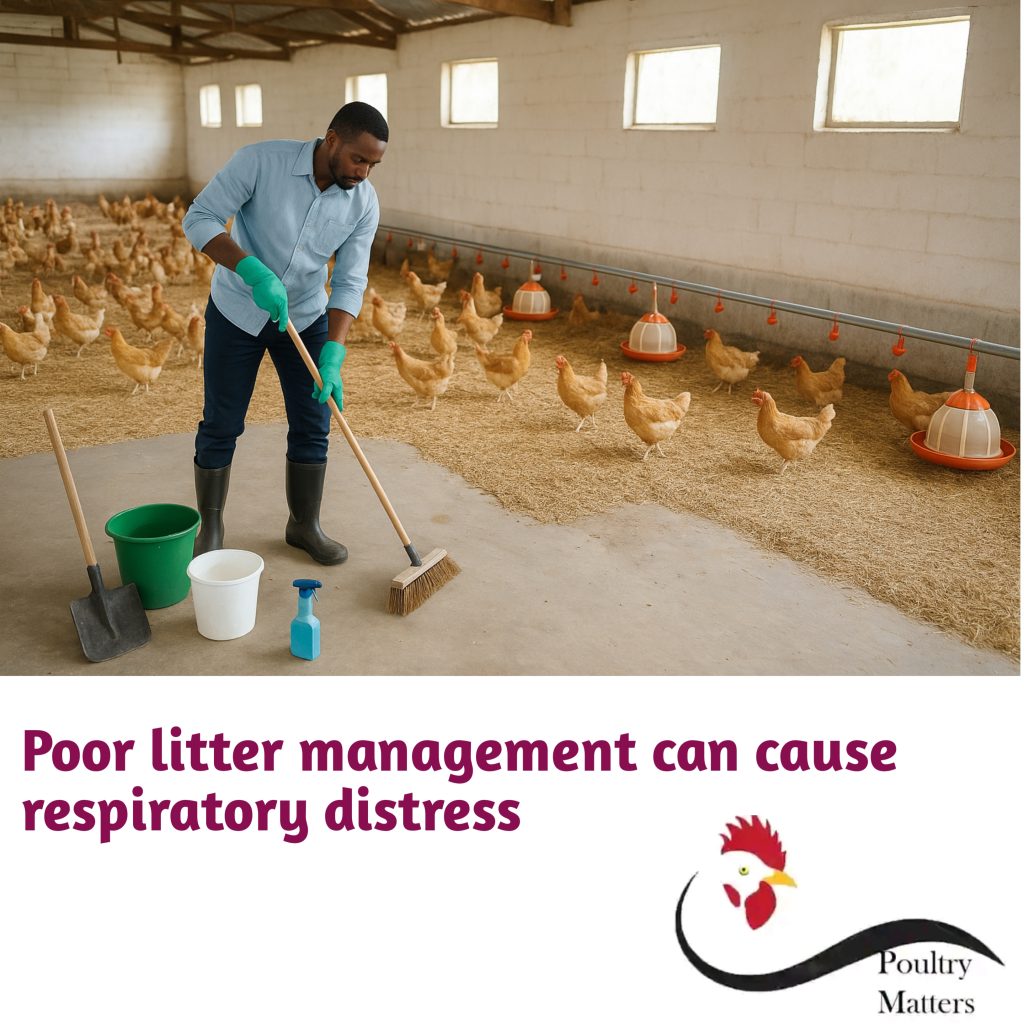
3. Inspect and maintain litter
- Identify and remove wet spots
- Add fresh litter where needed
- Observe droppings for unusual color, consistency or blood
- Check ammonia level (if you smell it, it’s too high)
Warning: Poor litter encourages respiratory diseases, footpad dermatitis and coccidiosis.
4. Check the ventilation system
- Ensure fans, windows and vents are working well
- Reduce dust buildup around openings
- Avoid overcrowding, which makes ventilation ineffective
- Proper airflow reduces moisture, heat and harmful gases.
Close observation of the birds
While cleaning, pay attention to:
- Posture (droopy wings, neck stretching, huddling)
- Breathing (wheezing, coughing)
- Movement (limping, separating from the flock)
- Eyes and nose (discharge)
- Feathers (ruffled, dirty, or dull)
These subtle changes are often the first signs of disease.
Conclusion –
Your birds depend on you to maintain a healthy environment. And your business depends on your ability to prevent problems before they begin.
Daily poultry house hygiene is not just about cleanliness—it is a strategic, preventive health practice. When the environment is clean, you can quickly spot subtle changes in your birds and act before diseases spread.
This simple daily routine can save you money, protect your flock and significantly improve your farm’s productivity.