Poultry farming is one of the fastest-growing agribusiness sectors globally and in Nigeria. It offers significant opportunities for profit, employment and food security. However, like every business, poultry farming comes with risks — some visible, others hidden. It is true many know about the risk of disease outbreak and focus focus heavily on disease prevention but often overlook other hidden risks that can also impact on productivity, profitability and long-term sustainability. While biosecurity, vaccination and disease control are crucial, true farm resilience requires a broader approach to risk management. Proper risk management is essential for building a sustainable, profitable and resilient poultry farm.
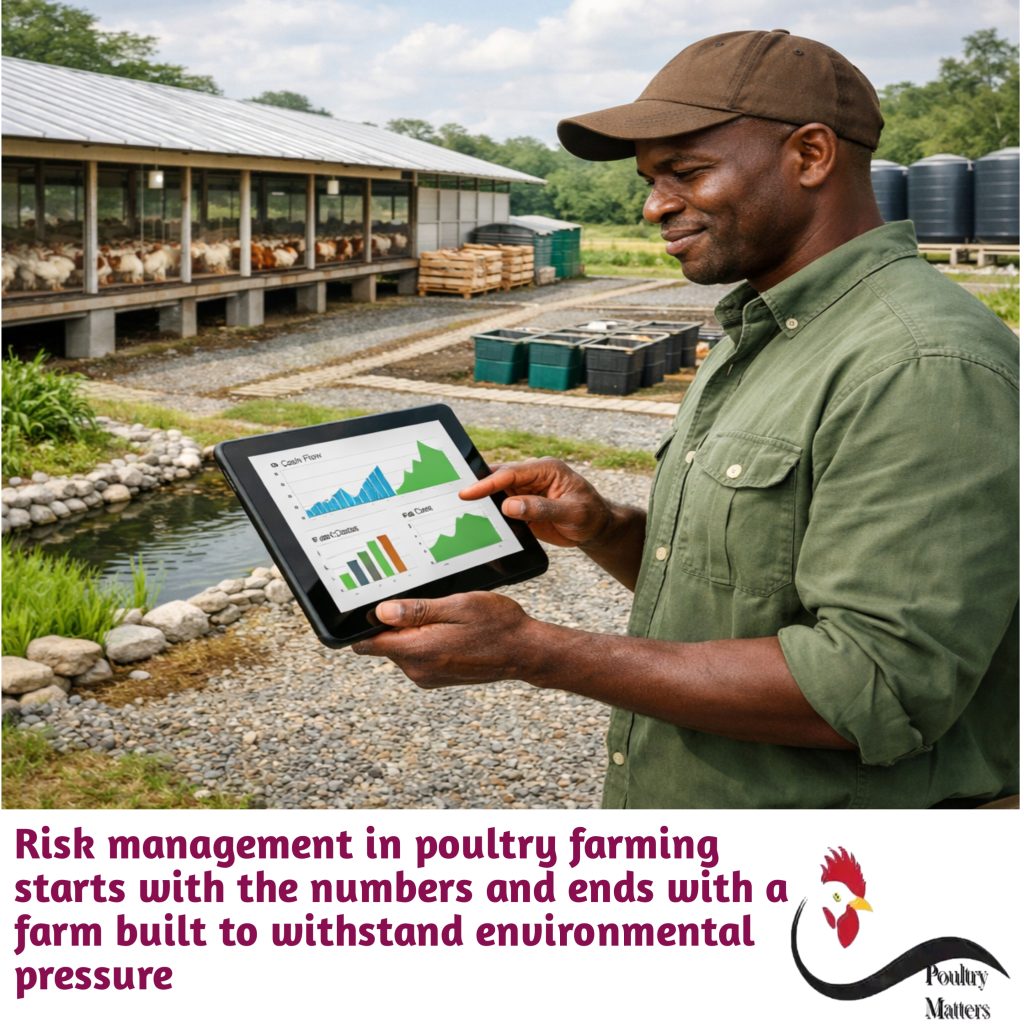
What is risk management in poultry farming?
Risk management is the systematic process of identifying, assessing and controlling threats to your poultry farm’s operations, profits and sustainability.
These threats can be financial, operational, environmental, biological or market-related. Effective risk management ensures that your farm can withstand unexpected challenges and continue to grow.
Key objectives of risk management
- Protect your birds, feed and infrastructure.
- Minimize financial losses.
- Ensure consistent productivity and quality.
- Build resilience against unforeseen events.
Types of risks in poultry farming
Risk in poultry farming is not limited to disease outbreaks. Here’s a detailed look at the different categories of risks farmers face:
1. Biological Risks – These are the most well-known risks and include:
- Disease outbreaks (e.g., Newcastle disease, Avian Influenza)
- Parasite infestations (mites, worms)
- Poor chick quality at purchase
Mitigation Strategies:
- Vaccinate and follow proper vaccination schedules.
- Buy chicks from reputable hatcheries.
- Maintain strict biosecurity protocols.
- Monitor birds daily for early signs of illness.
2. Environmental and Climate Risks – Poultry are sensitive to their environment. Environmental risks can affect health, growth and productivity. Examples:
- Extreme heat causing heat stress
- Cold or drafty housing leading to reduced immunity
- Flooding or poor drainage damaging housing
- Poor ventilation increasing ammonia and dust levels
Mitigation Strategies:
- Build well-ventilated poultry houses.
- Install cooling or heating systems as necessary.
- Ensure proper drainage and elevated housing.
- Monitor temperature and humidity regularly.
3. Operational Risks – Operational risks arise from poor management practices or human error. Examples:
- Improper feeding or watering schedules
- Mistakes in medication or vaccination
- Poor handling of birds causing stress or injury
- Staff negligence or lack of training
Mitigation Strategies:
- Train all staff on standard operating procedures (SOPs).
- Keep clear, daily operational records.
- Assign responsibilities and monitor compliance.
- Conduct regular staff refresher training.
4. Financial Risks – Money mismanagement is a hidden risk that can cripple poultry businesses. Examples:
- Poor budgeting leading to cash shortages
- Overreliance on loans without proper repayment plans
- Lack of record-keeping for expenses and income
Mitigation Strategies:
- Maintain separate accounts for farm and personal finances.
- Track all income and expenditure carefully.
- Create a contingency fund for emergencies.
- Conduct cost-benefit analyses before scaling operations.
5. Market and Regulatory Risks – Market volatility and regulatory changes can affect profits. Examples:
- Fluctuating prices for birds, eggs and feed
- Sudden import/export restrictions
- Consumer distrust due to poor farm hygiene or quality
Mitigation Strategies:
- Diversify market outlets and products.
- Maintain high standards of hygiene and product quality.
- Stay informed about government regulations and policies.
- Build strong relationships with buyers and suppliers.
6. Security Risks – Poultry farms can be targets for theft and vandalism. Examples:
- Stealing of birds, eggs or feed
- Vandalism of farm equipment or housing
Mitigation Strategies:
- Install fencing and secure gates.
- Consider CCTV or alarm systems for larger farms.
- Implement staff accountability systems.
- Restrict access to outsiders.
7. Supply Chain Risks – Supply chain interruptions can affect productivity and profitability. Examples:
- Shortages of feed or vaccination supplies
- Poor-quality feed affecting growth and health
- Delays in equipment maintenance or replacement
Mitigation Strategies:
- Maintain multiple suppliers for critical inputs.
- Stock emergency reserves of feed and vaccines.
- Test feed quality regularly.
- Plan purchases in advance to avoid disruption.
Conclusion
Poultry farming is a profitable venture, but success depends on howwell risks are managed. Disease prevention is essential, but hidden threats like environmental hazards, financial mismanagement, operational mistakes, security lapses, and market volatility can be just as damaging.