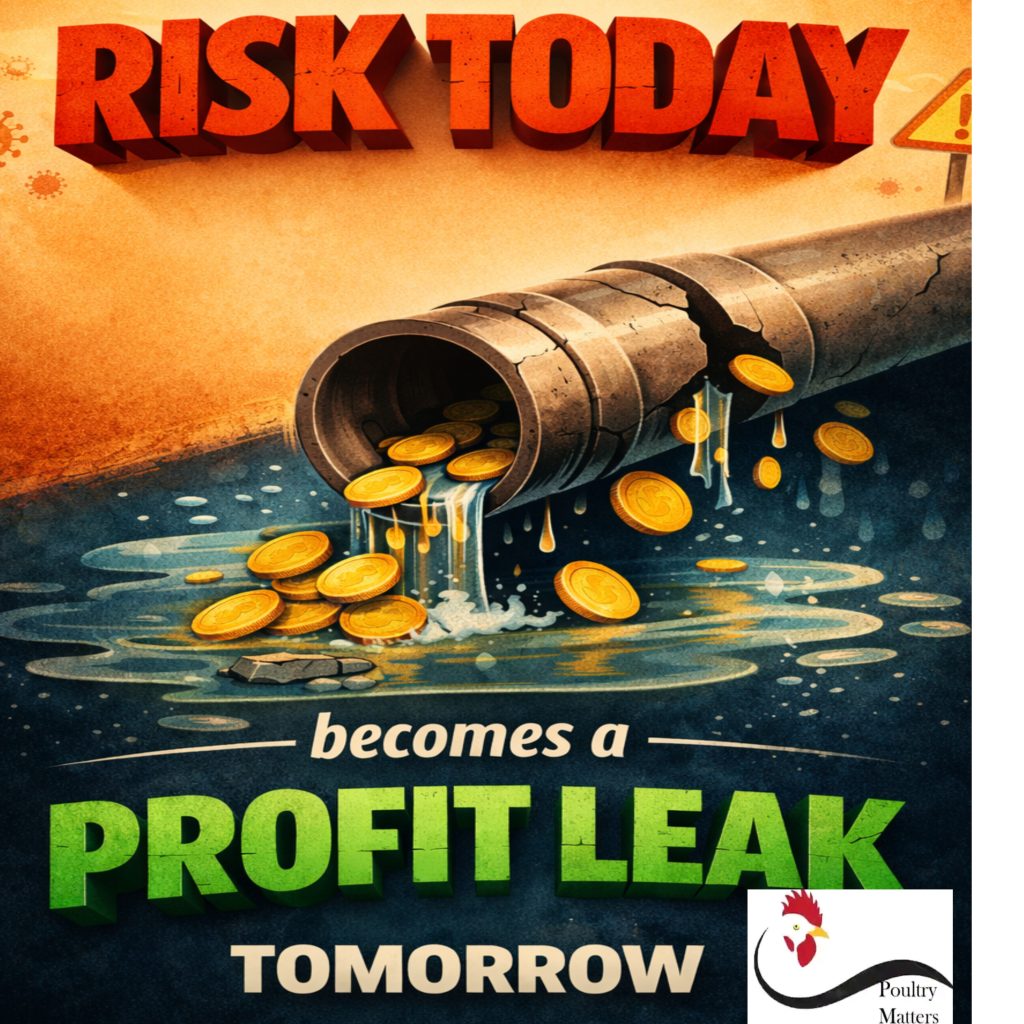
Poultry farming is a profitable and rewarding agribusiness but it is not without risks. Disease outbreaks, feed price fluctuations, poor management decisions and environmental stress can quickly turn a promising venture into a loss-making one, this makes protecting your poultry profit an essential through effective risk mitigation. Successful poultry farmers are not those who avoid risks entirely but those who anticipate, prepare for and manage risks effectively.
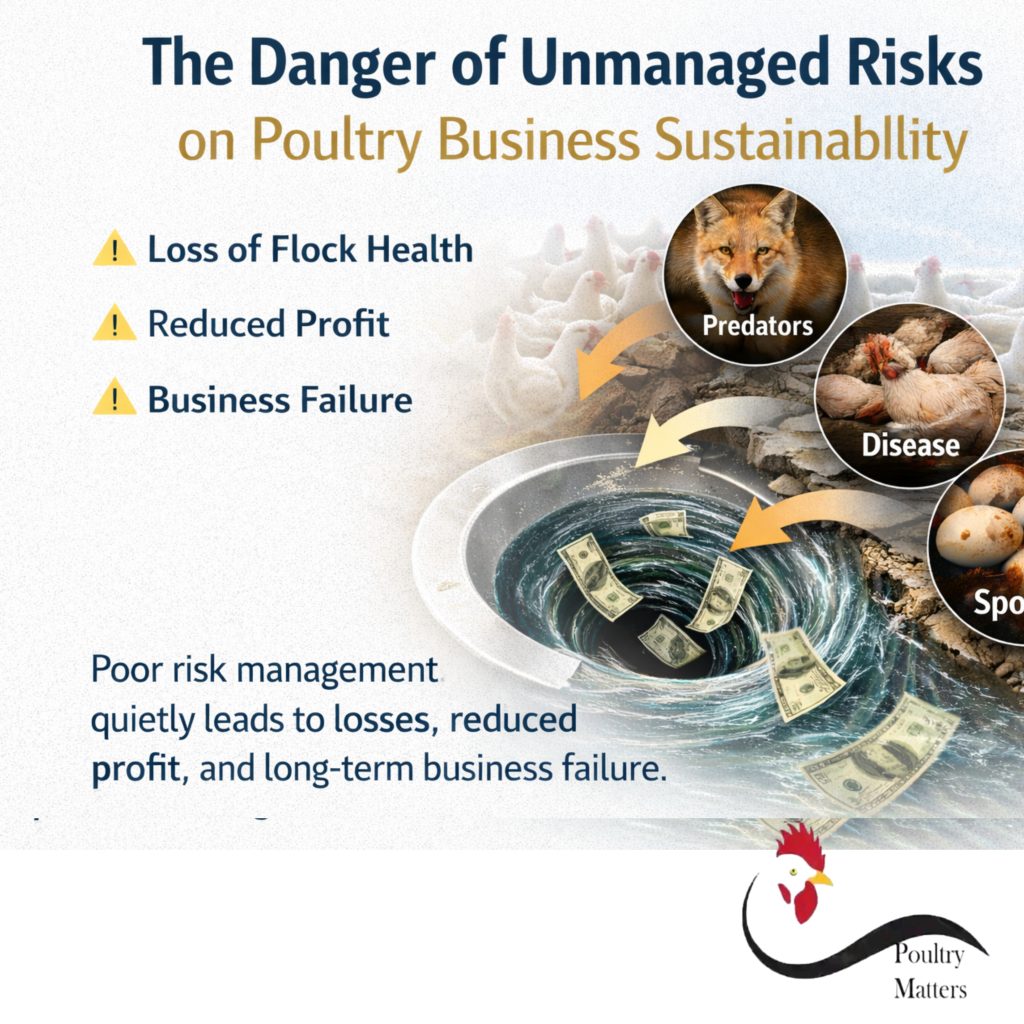
Effective risk management helps protect your birds, your investment and your long-term profitability. Outlined below is a clear, step-by-step guide to implementing practical risk management strategies in poultry farming –
Step 1: Identify the Major Risks in Your Poultry Business
The first step in risk management is knowing what you are up against. Poultry risks generally fall into the following categories:
1. Disease and Health Risks – These include outbreak of disease (which could be viral, bacterial and parasitic diseases such as Newcastle disease, fowl pox, coccidiosis and infectious bursal disease). Poor vaccination, weak biosecurity and delayed treatment increases the vulnerability of the birds.
2. Biosecurity Risks – Lapses in biosecurity such as uncontrolled visitors, shared equipment, lack of footbaths, rodents, wild birds and insects can introduce pathogens into your farm.
3. Feed and Nutrition Risks – Feed shortages, rising feed costs, adulterated feed, feed spoilage and poor feed formulation can lead to slow growth, poor egg production and high mortality.
4. Environmental and Management Risks – Heat stress, poor ventilation, overcrowding and water scarcity negatively affect bird performance and survival.
5. Market and Financial Risks – Price fluctuations, poor record-keeping, lack of savings and overreliance on one customer (poor market planning) can threaten the business sustainability.
Step 2: Assess the Impact and Likelihood of Each Risk
Not all risks carry the same weight. Some are more likely to occur, while others may have a more severe impact. This is why the follow self examination is necessary –
- How likely is this risk to happen?
- If it happens, how severe will the loss be?
- Can it be prevented or only controlled?
For example:
- A disease outbreak may be high impact and high likelihood if biosecurity is weak on the farm.
- Market price fluctuation may be high likelihood but moderate impact if you plan sales properly.
This assessment helps you focus your energy and resources on the most critical risks as priority.
Step 3: Put Preventive Measures in Place
Prevention is always better than cure in poultry farming. It help improve resource efficient utilization and output. Simple tips to ensure disease prevention include –
- Follow a strict vaccination schedule
- Source chicks from reputable hatcheries
- Isolate sick birds immediately
- Work with a qualified veterinarian
Strengthen Biosecurity
- Restrict farm access
- Install footbaths at entry points
- Disinfect equipment regularly
- Control rodents, insects and wild birds
Feed Risk Control
- Buy feed from trusted suppliers
- Store feed properly to avoid spoilage
- Consider partial on-farm feed formulation if feasible
- Always ensure clean, fresh water
Step 4: Develop a Simple Risk Management Plan
A risk management plan does not need to be complicated. It should clearly state the following –
- Identified risks
- Preventive actions
- Emergency actions
- Responsible persons
- Estimated costs
For example:
- Risk: Disease outbreak
- Action: Vaccination, biosecurity, isolation
- Emergency: Contact vet immediately
- Cost: Vaccines, disinfectants
This plan serves as a guide during stressful situations, helping you respond calmly and quickly.
Step 5: Keep Proper Records and Monitor Regularly
Records are powerful risk management tools. Keep track of:
- Mortality
- Feed consumption
- Medication and vaccination
- Egg production or weight gain
- Expenses and income
Regular review of records helps you detect problems early, such as:
- Sudden drop in feed intake
- Increase in mortality
- Decline in egg production
Early detection means quicker response and reduced losses.
Step 6: Build Financial Buffers and Smart Budgets
Financial risk is one of the most overlooked areas in poultry farming.
- Always have an emergency fund
- Avoid spending all profits immediately
- Insure your farm if possible
- Start small and scale gradually
- Budget for vaccines, medications, and unexpected costs
A well-planned budget protects your business during tough periods.
Step 7: Seek Information, Training, and Community Support
No poultry farmer should operate in isolation. Continuous learning reduces risk.
- Follow trusted poultry blogs and platforms
- Attend trainings, workshops, and webinars
- Engage with other farmers and experts
- Ask questions and share experiences
Being part of a knowledgeable community gives you access to solutions before problems escalate.
Step 8: Review and Improve Your Risk Strategy Regularly
Risk management is not a one-time activity. As your farm grows, new risks emerge.
- Review your risk plan every production cycle
- Adjust strategies based on experience
- Learn from past mistakes
- Stay updated with industry best practices
Continuous improvement keeps your poultry business resilient and competitive.
Conclusion
Effective risk management is the foundation of a successful poultry business. It protects your birds, stabilizes your income, and gives you confidence as a farmer. By identifying risks early, putting preventive measures in place, keeping good records, and staying informed, you significantly increase your chances of long-term success.
At Poultrygist, our goal is to provide practical, reliable, and farmer-focused insights that help both new and experienced poultry farmers make informed decisions and build sustainable businesses.
Do you have a risk you are currently facing in your poultry business? Share your experience or questions — learning grows stronger when shared
Read more – https://poultrygist.com.ng/2026/02/risk-management-in-poultry-farming/