Poultry farm maintenance
As the year gradually comes to a close, poultry farmers have a golden opportunity to reset, reorganize and prepare their farms for better productivity in the coming year. Whether you are a beginner or an experienced poultry farmer, end-of-year farm maintenance is one of the smartest investments you can make.
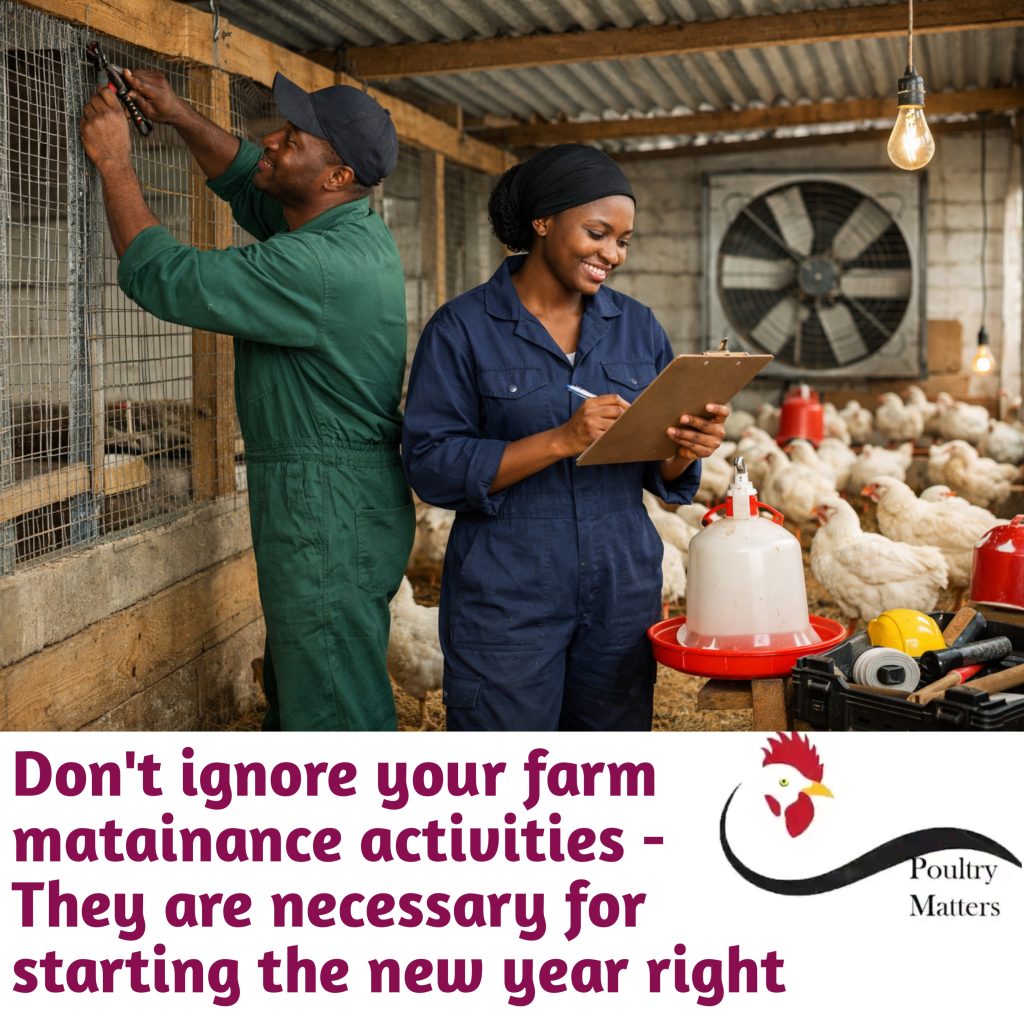
Poultry farm maintenance refers to the routine, systematic care, repair and management of all farm facilities, equipment and resources to ensure optimal productivity, safety and longevity of the farm. A well-maintained poultry farm reduces disease outbreaks, lowers mortality, improves feed efficiency, enhances bird welfare and ultimately boosts profitability. This comprehensive maintenance checklist will guide you through everything you must fix before the new year begins.
Deep clean the entire poultry house –
This refers to a thorough, intensive cleaning and disinfection process carried out to completely remove dirt, waste, pathogens and contaminants from the poultry house and all equipment. A clean environment is the foundation of a healthy farm. Deep cleaning at the end-of-year is more thorough than daily or weekly routines, it involves –
- Removal all old litter and bedding completely.
- Scrub floors, walls, and corners with detergents.
- Disinfect with approved poultry disinfectants.
- Smoke or fumigate the house if necessary.
- Allow the poultry house to dry properly before introducing new bedding.
Why it matters – Deep cleaning breaks disease cycles and removes harmful bacteria, parasites and viruses that may have accumulated over the year.
Repair and replace damaged structures on the farm
Quick repairs and replacement help prevent predator attacks, reduce injury risks, stop water leaks that cause dampness, improve overall farm hygiene and biosecurity. This step ensures the birds stay secure, comfortable and healthy. Small structural issues can cause large losses if ignored. Repair and replacement of damaged farm structures demands proper maintenance checks, such as-
- Fix cracks, holes, leaking roofs and broken planks.
- Repair wire mesh, netting and doors to maintain predator-proofing.
- Ensure windows and vents open and close properly.
- Repaint wooden or metal surfaces to prevent deterioration.
NB – It is necessary to prioritize repairing areas that affect ventilation or expose birds to predators.
Inspect ventilation, lighting and temperature systems –
This involves checking that fresh air flows properly through the poultry house, the lighting is adequate for the birds’ growth stage and the temperature is neither too hot nor too cold. Good ventilation reduces ammonia buildup, while correct lighting and temperature improve feed intake, immunity and overall performance. The farmer must do the following –
Ventilation:
- Remove cobwebs and blockages from vents.
- Ensure airflow crosses the house from inlet to outlet.
- Repair fans or replace faulty ones (if available).
Lighting:
- Replace dim or faulty bulbs.
- Check lighting schedule and balance light intensity.
- Clean dust from bulbs and lamp covers.
Temperature Control:
- Seal gaps that allow cold drafts.
- Prepare heat sources for brooding (charcoal, gas brooders, bulbs).
- Install thermometer/hygrometer for monitoring (if the farm can afford it)
Why it matters – Proper inspection ensures birds breathe clean air, grow well, remain active and stay comfortable
Upgrade biosecurity protocols –
Biosecurity is your number one defense against disease outbreaks, such as, Newcastle, Gumboro and coccidiosis. To make biosecurity more effective the following are recommended –
- Create or refresh a footbath at the entrance.
- Install a clear “No Visitor Entry” sign.
- Restrict farm access to only essential workers.
- Provide clean boots and overalls for workers.
- Review your waste disposal method.
- Check the drainage system around the poultry house.
- Inspect the perimeter fence and repair broken areas.
Review your farm records and vaccination schedule
Your poultry farm end-of-year maintenance is not limited to structural repairs only, it also includes reviewing your farm’s paperwork and systems. This is why is following checklist is necessary and important –
- Update flock performance records.
- Review feed consumption and cost performance.
- Study mortality and treatment patterns.
- Ensure vaccination schedules were followed correctly.
- Plan next year’s vaccination and medication program with a vet.
NB – Good recordkeeping allows you to identify losses, improve management, and create better growth plans for the farm
Maintain farm environment and surroundings –
This involve clearing bushes, debris, stagnant water and old equipment around the poultry house. It also includes improving drainage, leveling the ground and keeping the area tidy. Doing this at the end of the year reduces the risk of predators, pests, and disease, creating a safer, cleaner and more productive farm for the new year.
NB -Bushes attract predators, rodents and insects, while stagnant water encourages disease spread. The external environment affects farm biosecurity and bird comfort.
Service Tools, Equipment & Power Systems –
Attention must be given to the farm equipment and power source because reliable tools guarantee smooth operations on the farm. Therefore the checklist must be attended to and fix as maybe necessary
- Generator servicing (oil change, filter replacement)
- Brooders and heating equipment
- Water pumps
- Battery cages or wooden cages
- Weighing scales
- Wheelbarrows and shovels
Tip – Schedule major equipment repairs for December to avoid downtime during peak farming months.
Evaluate flock health before the year end –
Evaluating flock health involves checking the birds for signs of illness, abnormal behavior, poor growth or low egg production. Evaluating the flock’s health status at the yearend helps identify problems early, ensures that birds are in good condition before the new year and allows you to take corrective measures such as vaccination, treatment or improved management. Healthy flocks at year-end set the stage for higher productivity in the coming year. What to check include –
- General body weight and growth rate
- Feather quality
- Eggshell quality (for layers)
- Respiratory signs (sneezing, coughing)
- Any abnormal droppings
- Abnormal behaviors (sluggishness, low feeding)
- Invite a veterinarian for an end-of-year flock assessment. (Optional)
Plan the new year with a fresh start –
After completing all stages of poultry farm maintenance—deep cleaning, repairing structures, inspecting ventilation and lighting, maintaining the environment, and evaluating flock health—it’s important to plan ahead for the new year. This includes scheduling new flock purchases, budgeting for feed and vaccines, planning housing expansions, setting production goals, and preparing marketing strategies. Proper planning ensures your farm starts the year organized, efficient, and ready for maximum productivity.
Conclusion –
End-of-year poultry farm maintenance is not just a routine—it is a powerful strategy to protect your investment, improve efficiency, and increase profits. When you fix structural issues, strengthen biosecurity, clean equipment, review records, and prepare your systems for the year ahead, you set your birds up for success.
A healthy, well-maintained farm is the foundation for consistent growth and a productive new year.
Read more – https://poultrygist.com.ng/2025/01/key-poultry-farming-trends-to-note/