Poultry health management is often associated with what happens after birds become sick —identifying symptoms, administering treatment and trying to prevent further losses but effective health management starts much earlier.
Effective poultry health management begins with knowing your flock well enough to know what is normal with the flock and recognize when something changes.
A healthy flock does not remain healthy by accident. Its health is influenced everyday by feed, water, house-ventilation, litter condition, biosecurity practice, temperature, handling and general farm management. This is why daily flock observation should not be treated as a routine task to be completed quickly. It is one of the farmer’s most important management tool.
Infact for effective poultry heath-care we recommend this framework – Observe. Record. Respond. However, there is an important principle behind this framework.
An observation is a clue—not a diagnosis – A single unusual bird or isolated sign may deserve attention, but it may not tell you what is happening across the flock. Good flock management requires you to step back, gather information and look for patterns before drawing conclusions.
Observe (Learn to read the flock)
Before reaching for medication or assuming that something is wrong, observe. Walk into the poultry house with the intention of understanding what the flock is communicating –
- Are the birds active and responsive?
- Are they moving normally?
- Are they eating and drinking as expected?
- Are they evenly distributed around the house, or are many birds gathering in particular areas?
- Are they breathing normal?
- Do their eyes and feathers look normal?
- Is the litter reasonably dry?
- Are the droppings consistent with what you normally see?
- Has mortality changed?
- Are there birds that are consistently isolated, weak, reluctant to move or behaving differently?
These ten (10) observations may appear simple, but collectively they can provide valuable information about the condition of the flock.
Look beyond the bird that catches your attention – One bird standing apart from the flock may be an isolated case. but if several birds are showing similar behaviour, or if the same change is appearing across different parts of the house, the significance is different.This is why whole-flock observation matters.
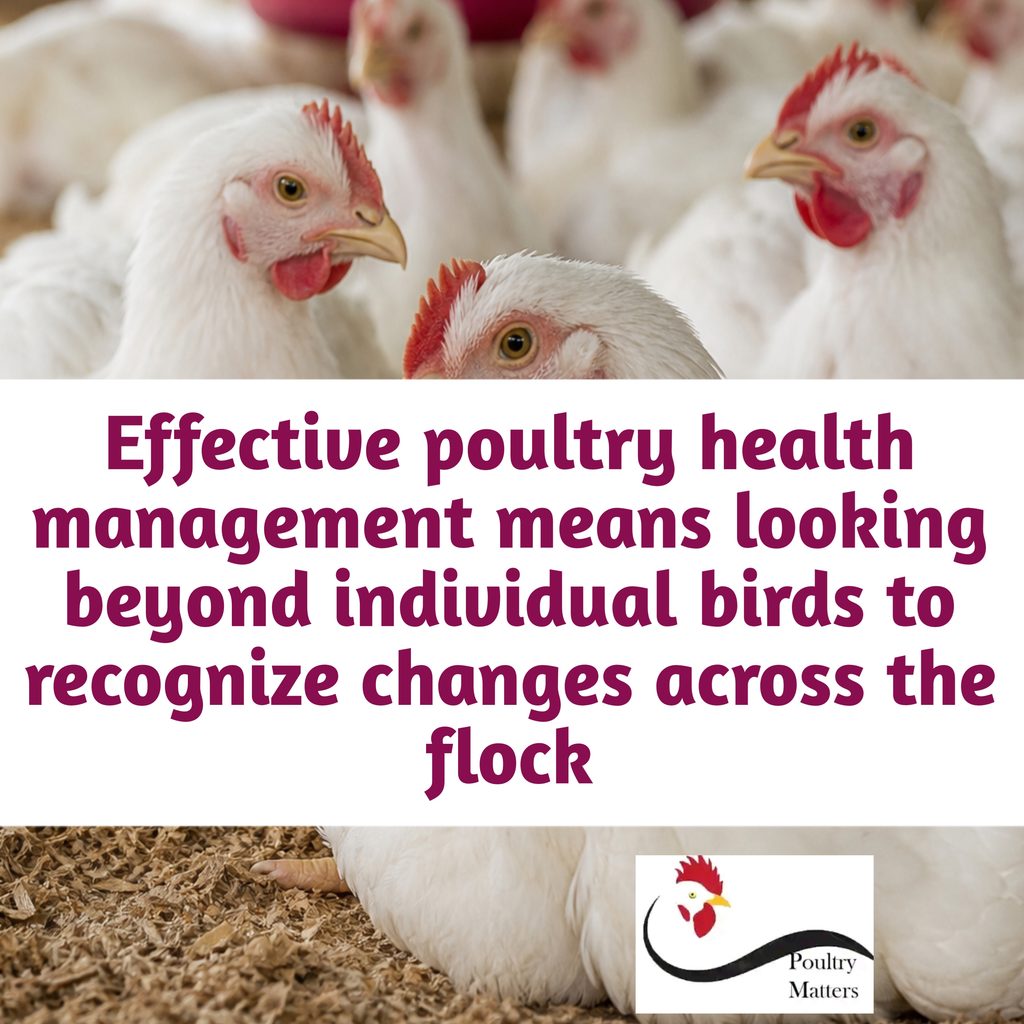
Record and watch out for the pattern
Observation becomes significantly more useful when it is recorded. One of the common weaknesses in farm management is relying on memory – Memory can help but record gives evidence.
Recording details of your observation is one of the most important principles in practical poultry health management. A farmer may notice unusual droppings and immediately associate them with a particular disease. Another may see reduced feed intake and conclude that the birds are sick. Someone else may notice birds panting and immediately assume disease but poultry health is more complex than that. Changes in bird behaviour, droppings, feed or water intake, breathing, production or appearance can have multiple possible causes. For example, panting may be associated with heat stress, but the farmer should not automatically assume that every panting bird has a disease.
A valid record helps you to answer properly the following questions about the flock –
- How much feed was consumed?
- How much water was consumed?
- What was the mortality?
- Were there culls?
- What was the egg production?
- What were the daily or weekly weights, where applicable?
- When did an unusual observation first appear?
- What changed afterwards?
- What action was taken?
- What happened following that action?
The observation is therefore important—but it is the starting point. Your record helps you to create a history about the flock (history that can become extremely valuable when problem developes)
NB – Record more than the problem. Keep details also of the days when everything is normal – it gives you reference point to quickly identify unusual changes.
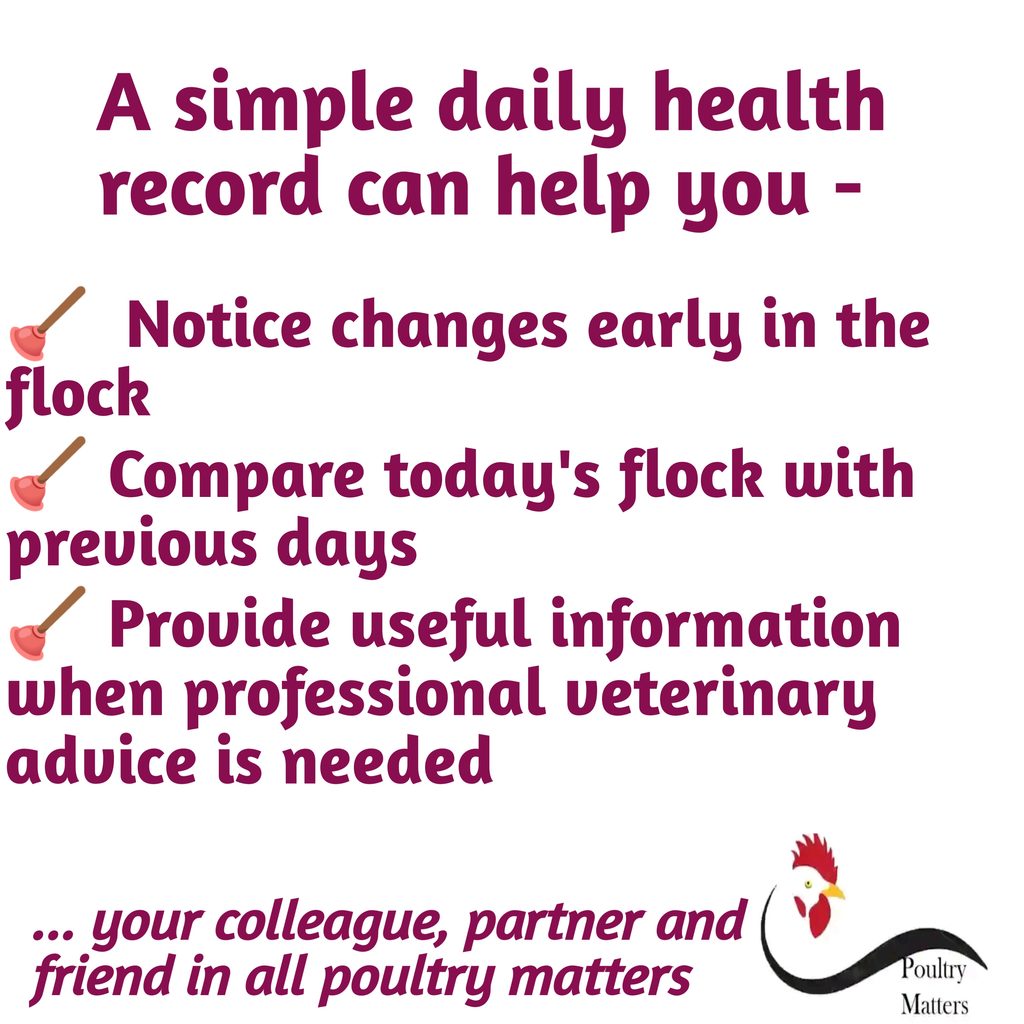
Respond – Let the evidence, guide the action
Observation without action has limited value but action without adequate information can also create problems. The goal is not to react to every unusual observation – The goal is to respond appropriately to meaningful changes. Your response may involve checking environmental conditions, reviewing feed and water management, inspecting equipment, improving hygiene or biosecurity, monitoring the flock more closely, reviewing records or seeking professional advice. The appropriate response depends on what the evidence suggests.And when disease is suspected, professional veterinary assessment should not be replaced by guesswork or self-medication. This is particularly important because different conditions can produce similar signs, while environmental or management problems can sometimes produce signs that may initially look like disease – Sometimes the problem is not immediately inside the bird, it may be just around the bird.
Conclusion
Poultry health management is not simply about what you do when birds become sick.
It is about creating and maintaining conditions that support flock health every day. It is about paying attention, knowing what is normal, recognizing change, identifying patterns. Keeping reliable records and responding appropriately rather than reacting blindly.
The farmer who develops this habit is not merely watching birds, they are learning to read the flock – that can make a significant difference to the way health, productivity and farm decisions are managed.
Therefore before leaving the poultry house every day, ask yourself –
- What did I observe today?
- What did I record?
- What has changed from what is normal?
- Is the change isolated or is there a pattern?
- What does the evidence suggest I should do next?
Then remember: One bird can be an exception. A pattern across the flock is a message.
Observe. Record. Respond.Good poultry health management begins with paying attention
Read more –