In poultry farming, success is never accidental, it is built on structure, discipline and informed decision-making. Many farmers focus heavily on one aspect, such as feeding or medication, while neglecting other critical areas. The result is often inconsistent performance, avoidable losses and reduced profitability, because in poultry farming no aspect of the management is more important than the other.
To build a resilient and profitable poultry business, you need a balanced system. That system rests on six strategic pillars –
- Housing and environmental management
- Feed and nutritional management
- Health and biosecurity management
- Waste management and farm hygiene
- Record management and performance monitoring
- Marketing and financial management
When properly managed, these management pillars work together to ensure healthy birds, optimal production and steady income.
Housing and environmental management
Your poultry house is more than just a shelter — it is the foundation of your birds performance. A well-designed housing system protects the birds from harsh weather, reduces stress and creates a controlled environment where the birds can thrive. Poor housing on the other hand, exposes birds to heat stress, cold, predators and disease.
Key issues to focus on why planning poultry housing include –
- Proper ventilation to ensure fresh air circulation – Many farmers underestimate ventilation. Yet, poor airflow leads to ammonia buildup, which damages the birds’ respiratory system and reduces productivity. Good ventilation allows fresh air to flow in and pushes out harmful gases like ammonia. This keeps birds healthy, supports proper breathing and reduces the risk of respiratory diseases.
- Adequate spacing to prevent overcrowding –Giving birds enough space reduces stress, fighting and competition for feed and water. It also helps prevent the rapid spread of diseases and supports uniform growth.
- Temperature control, especially for chicks – Chicks are very sensitive to temperature changes. Maintaining the right level of warmth helps them stay active, feed well and grow properly, while poor temperature control can lead to weakness or high mortality.
- Good lighting for feeding and growth stimulation – Proper lighting encourages birds to eat regularly and stay active. It also plays a key role in the flock growth rate and egg production, particularly in layers.
Feeding and nutritional Management
Feed accounts for up to 70% of poultry production costs, making it the most significant investment and one of the most critical pillars. Balanced nutrition directly affects growth rate, egg production, immunity and overall profitability. Feeding birds incorrectly, even for a short period, can have long-term consequences on productivity. Therefore, it is not just about feeding your birds — it is about feeding them right. Quality feed improves feed conversion ratio (FCR), meaning you spend less to achieve more growth.
Key focus areas in nutritional management include –
- Age-appropriate feed (starter, grower, finisher, layer mash) – Each stage of a bird’s life requires specific nutrients. Providing the right feed at the right stage ensures proper growth, efficient development and optimal productivity (example – egg production in layer birds).
- Consistent feeding schedule – Providing feed at regular, predictable intervals supports steady growth, reduces stress, and promotes efficient feed intake. This consistency improves the feed conversion ratio (FCR), meaning birds convert feed into body weight or egg production more efficiently, ultimately enhancing overall farm performance and profitability.
- Access to clean, fresh water at all times – Water is essential for digestion, nutrient absorption and temperature regulation. Continuous access to clean water supports health, feed intake and productivity.
- Avoiding feed contamination and wastage – Protecting feed from moisture, dirt, and pests preserves its quality, while minimizing spillage reduces unnecessary costs and improves feed efficiency.
Health and Biosecurity Management
Healthy birds are productive birds. Disease outbreaks can wipe out an entire flock within days, making health management non-negotiable. Biosecurity involves all measures taken to prevent disease from entering or spreading within your farm. Prevention is always better than cure. A strong biosecurity system protects not only your birds but also your investment.
Key focus areas in healthcare include –
- Strict farm access control (limit visitors) – Restricting entry into the farm reduces the risk of introducing diseases. Only essential personnel should have access to the poultry house and proper hygiene protocols should be followed at all times.
- Routine vaccination schedule – Administering vaccines when due as recommended protects birds against common diseases and helps maintain flock health and productivity. It is not enough to administer vaccine but the process must be made effective by administering the vaccine a the right time, in the right quantity using the right method
- Regular observation of the flock for early detection of illness – Daily monitoring allows for quick identification of abnormal behavior or symptoms, enabling prompt intervention before issues escalate.
- Clean water and sanitized equipment – Providing hygienic water and regularly disinfecting equipment prevents contamination and limits the spread of harmful pathogens.
Waste Management and Farm Hygiene
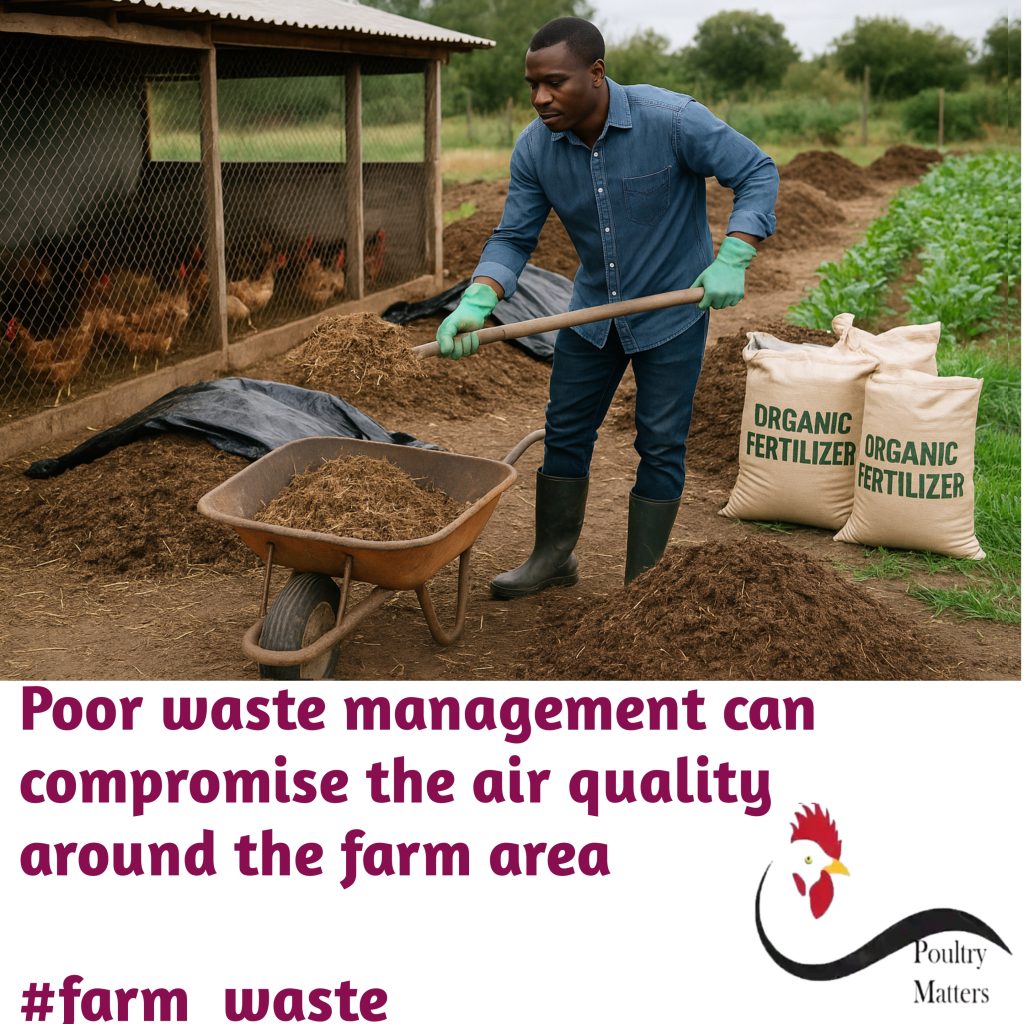
Poultry waste — droppings, litter and spilled feed can quickly become a major problem if not properly managed. Poor waste management leads to ammonia buildup, attracts pests and increases the risk of disease outbreaks among the flock
Proper waste management focuses on the following key areas –
- Regular removal or treatment of poultry droppings – Frequent removal or proper treatment of droppings helps control odor, reduces ammonia buildup, and minimizes the risk of disease outbreaks.
- Keeping litter dry and clean – Dry, clean litter creates a healthier environment for birds by preventing bacterial growth, reducing respiratory problems, and improving overall comfort.
- Proper drainage around the poultry house – Effective drainage prevents water accumulation, keeping the poultry environment dry and reducing conditions that encourage disease-causing organisms.
- Safe disposal or reuse (e.g., manure for farming) – Properly disposing of or reusing poultry waste, such as converting it into manure for crop production, promotes environmental safety and adds economic value.
Record Keeping and Performance Monitoring
What you do not measure, you cannot improve. Many poultry farmers operate without proper records, making it difficult to track performance, identify problems or make informed decisions. Keeping effective and valid records of the farm operations supports informed decision-making, improves productivity and ensures better planning for increased profitability.
Key records to keep in your poultry operations include
- Daily feed Consumption
- Water intake
- Mortality rate
- Egg production (for layers)
- Medication and vaccination schedule
- Sales and expenses
NB – Accurate records help you identify trends early — whether it is declining feed efficiency or rising mortality, so you can take corrective action quickly.
Marketing and Financial Management
Poultry farming is a business not just a production activity. No matter how well you raise your birds, profitability depends on how effectively you sell your products. A strategic approach to marketing and finances ensures steady cash flow and long-term sustainability of the farm
Key focus areas for your marketing strategy are –
- Identifying your target market (retailers, households, restaurants)
Clearly defining your customer segments helps you tailor your products, packaging, and sales approach to meet specific market needs and maximize demand. - Building reliable customer relationships – Establishing trust through consistent quality, timely delivery, and good communication encourages repeat business and long-term partnerships.
- Pricing your products correctly — Setting the right price requires balancing production costs, market demand and competitor pricing to ensure profitability while remaining competitive.
- Managing cash flow and reinvesting wisely – Maintaining steady cash flow ensures smooth daily operations, while strategic reinvestment supports farm expansion, improved efficiency and long-term growth
NB – Successful poultry farmers are not just producers—they are strategic marketers who understand demand, timing and value.
Conclusion –
Each of these pillars is important on its own but true success comes when they work together as a system.
- Good housing supports bird health
- Proper feeding enhances growth and productivity
- Strong biosecurity prevents disease invasion
- Clean environments promote efficiency
- Accurate records guide decisions in the right direction
- Smart marketing drives profit
Poultry farming offers immense opportunities for consistent income and business growth—but only when managed strategically.
By focusing on these six pillars—housing, nutrition, health, waste management, record keeping, and marketing—you create a strong foundation for a sustainable and profitable poultry enterprise.